
How it works
A solar and battery system is designed to work around how you actually use energy, not just how much you generate. The process starts with understanding your energy usage and choosing the right electricity tariff, then selecting a system that delivers the best long-term value.
Step 1: Choosing the Right Energy Tariff
Battery storage works best when paired with a suitable electricity tariff. Off-peak tariffs, such as Octopus Go, Intelligent, or Agile, allow electricity to be purchased at much lower rates overnight. Your battery can then be charged when energy is cheapest and used during the day when electricity costs are highest — reducing your reliance on peak-rate grid power.
Step 2: System Design & Sizing
Every system is designed around your property and energy profile. This includes selecting the correct battery capacity, inverter size, and control strategy based on:
Your typical electricity usage
Daytime vs evening demand
Existing or planned solar PV
Future requirements such as EV charging or heat pumps
Correct sizing is critical — oversized systems waste money, while undersized systems limit savings.
Step 3: Solar Generation & Self-Consumption
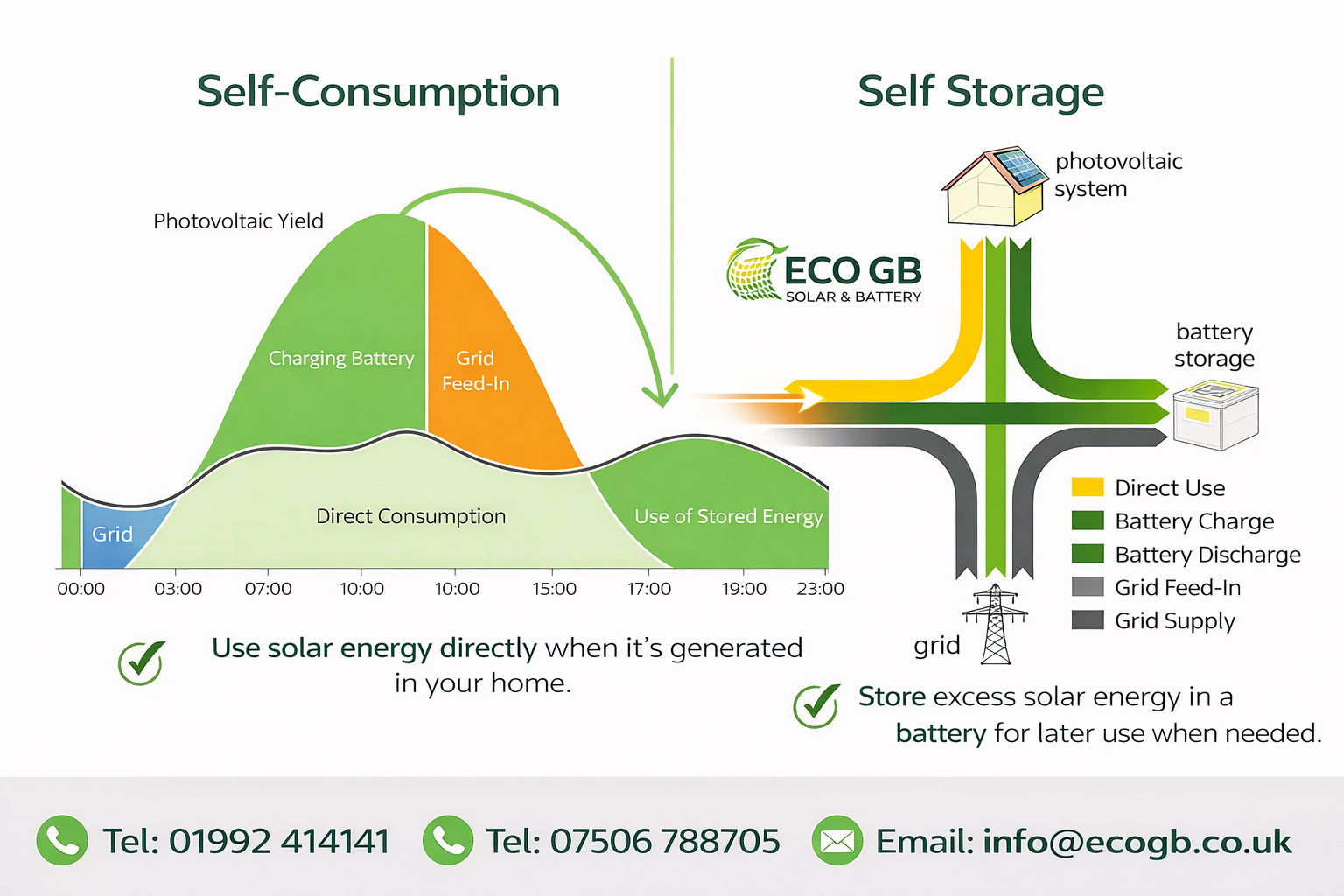
If solar PV is installed, electricity generated during the day is first used directly in your home. Any surplus energy is then stored in the battery instead of being exported to the grid at low rates. This maximises self-consumption and increases the overall efficiency of the system.
Step 4: Battery Storage & Smart Control
The battery automatically stores energy when it is cheapest or most readily available and discharges it when demand is highest. Smart controls manage this process seamlessly, requiring little to no user input while ensuring the system operates safely and efficiently.
Step 5: Installation, Commissioning & Monitoring
Once installed, systems are fully tested, commissioned, and configured for optimal performance. Monitoring tools allow you to see how much energy you’re generating, storing, and using — giving clear visibility of savings and system performance over time.
Why It Matters
When designed correctly, a solar and battery system can significantly reduce electricity bills, increase energy independence, and provide long-term protection against rising energy costs. The key is combining the right tariff, the right technology, and the right design approach — which is where experience makes the difference.
Contact us
Interested in working together? Fill out some info and we will be in touch shortly. We can’t wait to hear from you!